Map › Guides › Buying in Denmark
How to buy a house in Denmark as a foreigner
Denmark has some of the strictest rules in Europe on who may buy property. Rural houses in Jutland and on Funen can be good value, but before you look seriously, check whether you are allowed to buy at all, and for what use.
Can a foreigner buy a house in Denmark?
The general rule, according to the Department of Civil Affairs (Civilstyrelsen), is that if you do not have domicile in Denmark and have not lived in Denmark for at least five years in total, you need permission from Civilstyrelsen to acquire real property there: a house, a plot, a flat or a summer house. This applies regardless of how you intend to use the property and regardless of your nationality.
The five years do not have to be consecutive, and it does not matter how long ago you lived in Denmark; Civilstyrelsen uses the Danish civil registration system (CPR) to check.
EU, EEA and Swiss citizens: year-round homes
If you are an EU, EEA or Swiss citizen, you can under certain conditions buy a home to live in all year round (helårsbolig) without permission, as part of exercising your free-movement rights: for example if you work in Denmark, are self-employed there, or have sufficient means to support yourself. When ownership is registered, you must sign a declaration to the Land Registration Court that the property is your permanent home and not a holiday home. Civilstyrelsen warns that if you later move out, you may be required to sell unless you have lived in Denmark for more than five years by then.
Holiday homes and summer houses
Buying a non-permanent dwelling, such as a summer house or a house you will only use for holidays, is much harder. Permission is only granted if you have a particularly strong connection to Denmark. Civilstyrelsen gives as an example having spent at least one week of holiday in Denmark every year for the past 25 years; family, language and cultural ties can also count. In practice, most foreign buyers cannot buy a Danish house purely as a holiday home.
Non-EU citizens
Citizens of countries outside the EU, EEA and Switzerland without domicile or five years of residence need permission, which is generally only granted for a specific property that they will live in permanently while lawfully resident in Denmark.
Farms and large plots
Many rural listings come with a hectare or more of land. Properties registered as agricultural property can be subject to additional rules under Danish agricultural legislation. Ask the broker whether the property has agricultural obligations (landbrugspligt) before you bid.
How the purchase works
- Broker and documents. Most houses are sold through an estate agent (ejendomsmægler) who represents the seller. The sales material usually includes a condition report (tilstandsrapport) and an electrical installation report (elinstallationsrapport). Buyers often take out a change-of-ownership insurance (ejerskifteforsikring); ask the broker what is offered.
- Buyer's adviser. Because the agent works for the seller, many buyers use their own adviser or lawyer (køberrådgiver) to check the contract.
- Purchase agreement. The purchase agreement (købsaftale) is usually signed digitally. A consumer buyer usually has a right of withdrawal: you can withdraw within six working days of the agreement, in writing, provided you pay the seller compensation of 1% of the purchase price within the deadline. There are exceptions, for example for some agricultural property.
- Deed and registration. Ownership is transferred with a deed (skøde), registered digitally with the Land Registration Court (Tinglysningsretten).
Costs and taxes
- Registration fee for the deed (tinglysningsafgift): in 2026 a fixed fee of DKK 1,850 plus 0.6% of the purchase price (the variable part is rounded up to the nearest DKK 100). Source: the Danish Tax Agency's legal guide.
- Mortgage registration has its own fee if you take a loan.
- Adviser, lawyer and insurance costs.
- Annual property taxes: Danish homeowners pay property value tax (ejendomsværdiskat) and land tax (grundskyld); the system has recently been reformed. Check the current rules with the Danish Tax Agency (Skattestyrelsen).
Financing
Danish mortgage credit institutions lend mainly to people with income and residence in Denmark. Non-resident buyers usually finance from home.
Where to look
If you meet the rules, browse cheap houses in Denmark: North Jutland, Southern Denmark and Central Jutland, or the Danish houses with 1 hectare or more of land. If Denmark's rules rule you out, neighbouring Sweden has no restrictions on foreign buyers.
Official sources
Cheap houses in Denmark right now
€43 487 325 000 DKK
House on Mors with its own lake, 9,091 m²
Morsø, Nordjylland, Denmark
155 m² · 9 091 m² plot · 3 rooms
€99 686 745 000 DKK
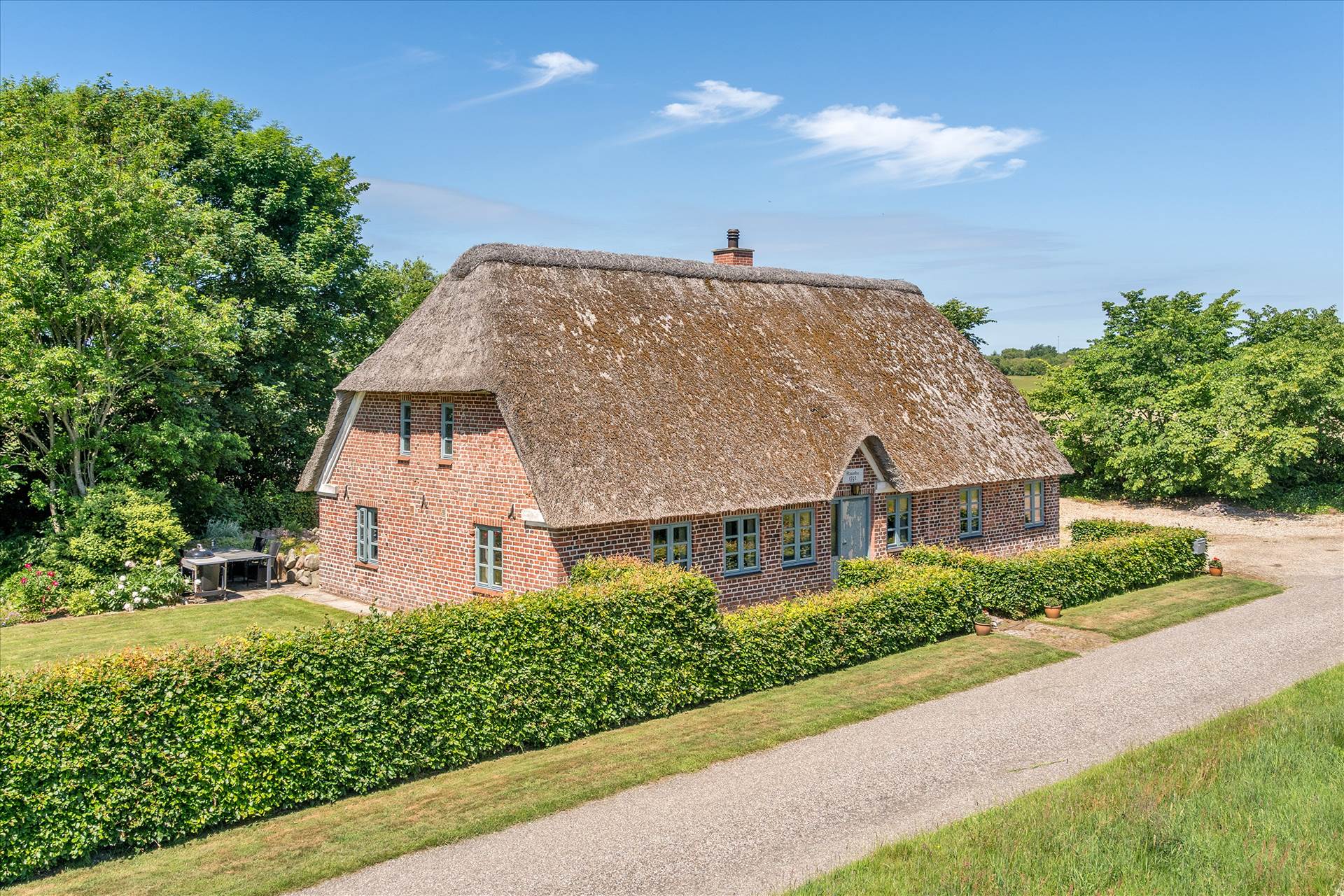
Thatched farmhouse from 1793 near Varde Å, 1.7 ha
Varde, Syddanmark, Denmark
120 m² · 17 100 m² plot · 5 rooms

€106 359 795 000 DKK
Red-brick country house on Mors with 1 ha
Morsø, Nordjylland, Denmark
160 m² · 10 420 m² plot · 3 rooms