Map › Guides › Buying in Sweden
How to buy a house in Sweden as a foreigner
Sweden is one of the easiest countries in Europe for a foreigner to buy a house in, and rural houses can be very affordable. There is no general restriction on foreign buyers, the process is digital and transparent, and transfer costs are moderate. There is one important new rule, though: since 1 July 2026 every private buyer needs a Swedish identity number or coordination number to register ownership.
Can a foreigner buy a house in Sweden?
Yes. Sweden does not restrict who may buy a house: EU citizens, British, American, Canadian and other buyers can all buy on essentially the same terms as Swedes. According to Lantmäteriet, the Swedish land registry, the rules for registration of ownership are essentially the same for foreign and Swedish citizens.
New since 1 July 2026: a natural person who acquires property must provide a Swedish personal identity number (personnummer) or a coordination number (samordningsnummer) when applying for registration of ownership (lagfart). If you do not live in Sweden, you will need a coordination number, which you apply for through Skatteverket, the Swedish Tax Agency. Lantmäteriet notes that this includes booking an identity check at one of Sweden's state service centres. For purchases, the date the purchase contract was signed decides whether the new rule applies. Plan for this early: check the current procedure and processing times on Skatteverket's website before you sign.
Companies buying property need a Swedish organisation number and must show that their beneficial owners are registered.
How the purchase works
- Find a house. Most houses are sold through a licensed estate agent (fastighetsmäklare). Agents are registered with and supervised by the Swedish Estate Agents Inspectorate (Fastighetsmäklarinspektionen). Although the seller hires and pays the agent, Swedish law requires the agent to act as an impartial intermediary and look after the interests of both buyer and seller.
- Bidding. Houses are often sold through an open bidding process run by the agent. In Sweden, bids are not legally binding: neither buyer nor seller is bound until a written contract is signed. That also means a higher bid can appear late.
- Inspect the house. In Sweden the buyer has a legal duty to inspect (undersökningsplikt). Defects you could have discovered with a careful inspection are your responsibility; the seller is liable only for hidden defects (dolda fel). Many buyers hire an independent building inspector. Sometimes the seller has already had the house inspected; read that report, but consider your own as well.
- Sign the contract. The purchase contract (köpekontrakt) must be in writing and signed by both parties. It sets the price, the deposit (handpenning) and the completion date (tillträde).
- Completion. On the completion date you pay the rest of the price and the seller signs the deed of sale (köpebrev). You get the keys.
- Register ownership. You must apply for registration of ownership (lagfart) with Lantmäteriet within three months. If you have a Swedish mortgage, the bank often does this for you.
Costs and taxes
- Stamp duty (stämpelskatt): 1.5% for private individuals, calculated on the purchase price or the property's tax assessment value from the year before, whichever is higher (legal entities pay 4.25%). Plus a processing fee of SEK 825. Source: Lantmäteriet.
- Mortgage deeds (pantbrev): if you borrow against the house and new mortgage deeds are needed, there is a stamp duty of 2% of the amount registered, plus a processing fee. Existing mortgage deeds can usually be taken over at no extra stamp duty.
- Agent's fee: normally paid by the seller.
- Inspection, legal advice and translation: your own choice, and worth it.
- Annual property charge: owners of a house pay a municipal property charge (kommunal fastighetsavgift), which is capped per year. Skatteverket explains how it works for owners living abroad, including whether you need to file a Swedish tax return.
Fees and caps are adjusted from time to time. Check the current figures with Lantmäteriet and Skatteverket.
Financing
Swedish banks lend mainly to people who live and earn an income in Sweden. As a non-resident, getting a Swedish mortgage can be difficult, so most foreign buyers of cheap houses pay in cash or borrow in their home country. Prices are in Swedish kronor, so compare the cost of currency exchange between your bank and specialised transfer services.
Living in your Swedish house
Owning a house does not give you a right to live in Sweden. EU and EEA citizens can live in Sweden under EU free-movement rules. Citizens of other countries, including the UK and the US, can usually stay up to 90 days in any 180-day period in the Schengen area and need a residence permit from Migrationsverket for longer stays. Read does owning a house give you residency?
Practical checks for rural Swedish houses
- Water and sewage: many rural houses have a private well and their own sewage system. Ask for a water test and the status of the sewage system; the municipality may require upgrades.
- Radon: Sweden has a lot of radon in the ground and in some building materials. Ask whether a radon measurement has been done.
- Heating: check the system and the energy declaration (energideklaration). Read heating a Nordic house.
- Roads: some private roads are run by a road association (vägsamfällighet) with an annual fee and shared maintenance.
More detail in wells, septic systems and radon: technical checks in Sweden and Finland.
Where to look
Browse all cheap houses in Sweden, or go straight to Värmland, Dalarna, Västerbotten or the Småland counties of Kalmar and Kronoberg. Want the cheapest? See houses in Sweden under €100,000. Curious why prices are so low? Read why houses in Sweden are so cheap.
Official sources
- Lantmäteriet: registration of ownership (incl. the coordination number rule from 1 July 2026)
- Lantmäteriet: stamp duty and fees
- Lantmäteriet: the rules are essentially the same for foreign and Swedish citizens
- Skatteverket: coordination numbers
- Skatteverket: owning real property in Sweden while living abroad
- Skatteverket: property charge and property tax
- Fastighetsmäklarinspektionen (Swedish Estate Agents Inspectorate)
- Migrationsverket (Swedish Migration Agency)
Cheap houses in Sweden right now

€50 071 550 000 SEK
Red farmhouse with updated kitchen near Malå
Malå, Västerbotten, Sweden
150 m² · 12 119 m² plot · 5 rooms

€63 271 695 000 SEK
Red farmhouse with meadows near Burträsk
Skellefteå, Västerbotten, Sweden
140 m² · 64 139 m² plot · 5 rooms
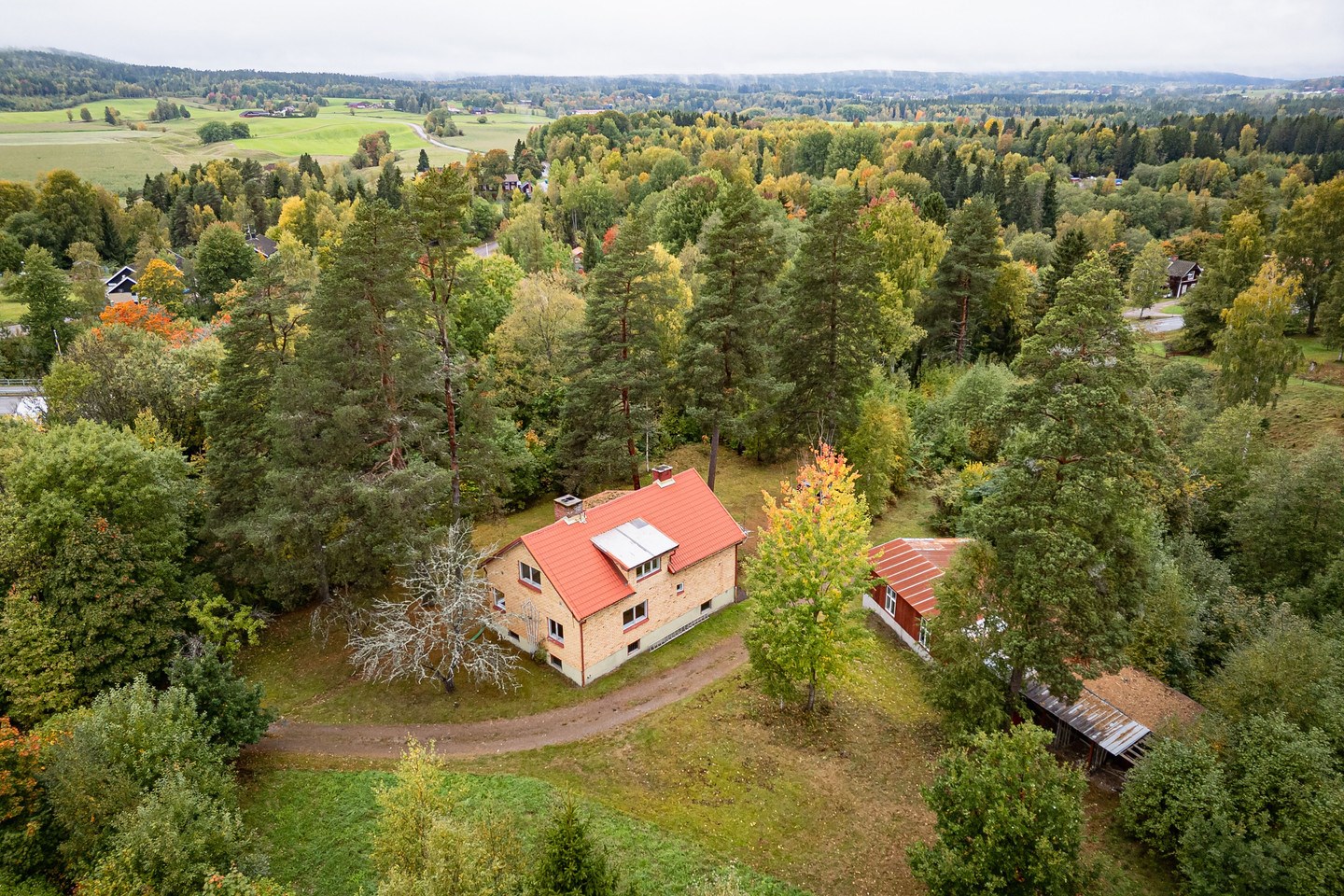
€63 764 700 000 SEK
Spacious 1955 villa in a secluded spot, Koppom
Eda, Värmland, Sweden
127 m² · 6 814 m² plot · 6 rooms