Map › Guides › Buying in France
How to buy a house in France as a foreigner
France is open to foreign buyers: there are no restrictions based on nationality or residence, and the process is the same for everyone. It is also highly regulated. A public notary (notaire) executes every sale, the buyer gets a cooling-off period, and the seller must provide a set of technical surveys. The main surprise for first-time buyers is the cost on top of the price, usually called "notary fees".
Can a foreigner buy a house in France?
Yes. Anyone can buy property in France, whatever their nationality and wherever they live. Buying a house does not give you a right of residence, though: non-EU citizens need a visa or residence permit to stay longer than the Schengen short-stay limit (see does owning a house give you residency?).
How the purchase works
- Offer. Houses are sold by estate agents (agents immobiliers) or by notaires, and sometimes privately. You make a written offer (offre d'achat).
- Preliminary contract. Buyer and seller usually sign a preliminary contract first: a compromis de vente (binding on both sides) or a promesse de vente. It is signed at the notaire's office or the agent's office, and sets the price, the conditions and the completion date. The buyer usually pays a deposit at this stage.
- 10-day cooling-off. A non-professional buyer of a home has a 10-day withdrawal period (délai de rétractation) after receiving the signed preliminary contract, during which they can withdraw without giving a reason. If there is no preliminary contract, the buyer gets a 10-day reflection period before the final deed instead.
- Conditions. The contract can include conditions (conditions suspensives), most commonly obtaining a mortgage. Make sure any condition you need is written into the contract.
- Pre-emption checks. In the meantime, the notaire checks the title and planning documents and whether anyone has a right of pre-emption. In rural areas, the SAFER (the body that oversees farmland) can have a pre-emption right on some agricultural property.
- Final deed. A few months later, buyer and seller sign the final deed (acte authentique de vente) before the notaire. You pay the balance and the fees, and the house is yours. The notaire then registers the sale with the land registry.
You can choose your own notaire; if buyer and seller use different notaires, they share the fee, so this usually does not cost you more. If you do not read French well, ask for a translation or bring an interpreter: you must understand what you sign.
Costs: what are notary fees?
The "notary fees" (frais de notaire) paid by the buyer are mostly taxes collected by the notaire on behalf of the state and the département, plus the notaire's regulated fee and disbursements. According to service-public.fr, for an existing (older) home they generally come to around 7 to 8% of the purchase price; for a new-build home they are much lower. The exact amount depends on the département and the price: service-public.fr has an official calculator.
Other costs to plan for:
- Estate agent's fee: can be paid by the buyer or the seller; the listing must say who pays and whether the advertised price includes it.
- Survey and renovation quotes: recommended for older stone houses.
- Annual taxes: the property tax (taxe foncière) for owners, and for second homes the housing tax on second homes (taxe d'habitation sur les résidences secondaires), which some municipalities increase.
Compulsory surveys (diagnostics)
The seller must provide a technical file (dossier de diagnostic technique) with the contract. Depending on the age and location of the house, it includes reports on energy performance (DPE), asbestos, lead, termites, gas and electrical installations, natural risks and, for houses not connected to mains drainage, the septic system (assainissement non collectif). Read these carefully: the DPE affects heating costs and future renovation rules, and a non-compliant septic system may have to be upgraded at the buyer's expense within a deadline.
Financing
French banks do lend to non-residents, but conditions are stricter and they usually want a larger deposit and proof of income. Many buyers of houses under €150,000 pay in cash. If you need a loan, include a financing condition in the compromis.
Practical tips for cheap rural houses
- Check the roof, damp in stone walls, the electrics and the septic report.
- Barns and outbuildings are great, but converting them usually needs planning permission from the mairie.
- Ask about the internet connection and mobile coverage, and the distance to a doctor and a supermarket.
Where to look
See all cheap houses in France, the stone houses and farmhouses, or browse by region: Nouvelle-Aquitaine (Creuse, Haute-Vienne, Charente, Dordogne), Normandy and Auvergne-Rhône-Alpes. Our article Creuse, Charente, Dordogne: where to find cheap countryside houses compares the main areas.
Official sources
Cheap houses in France right now
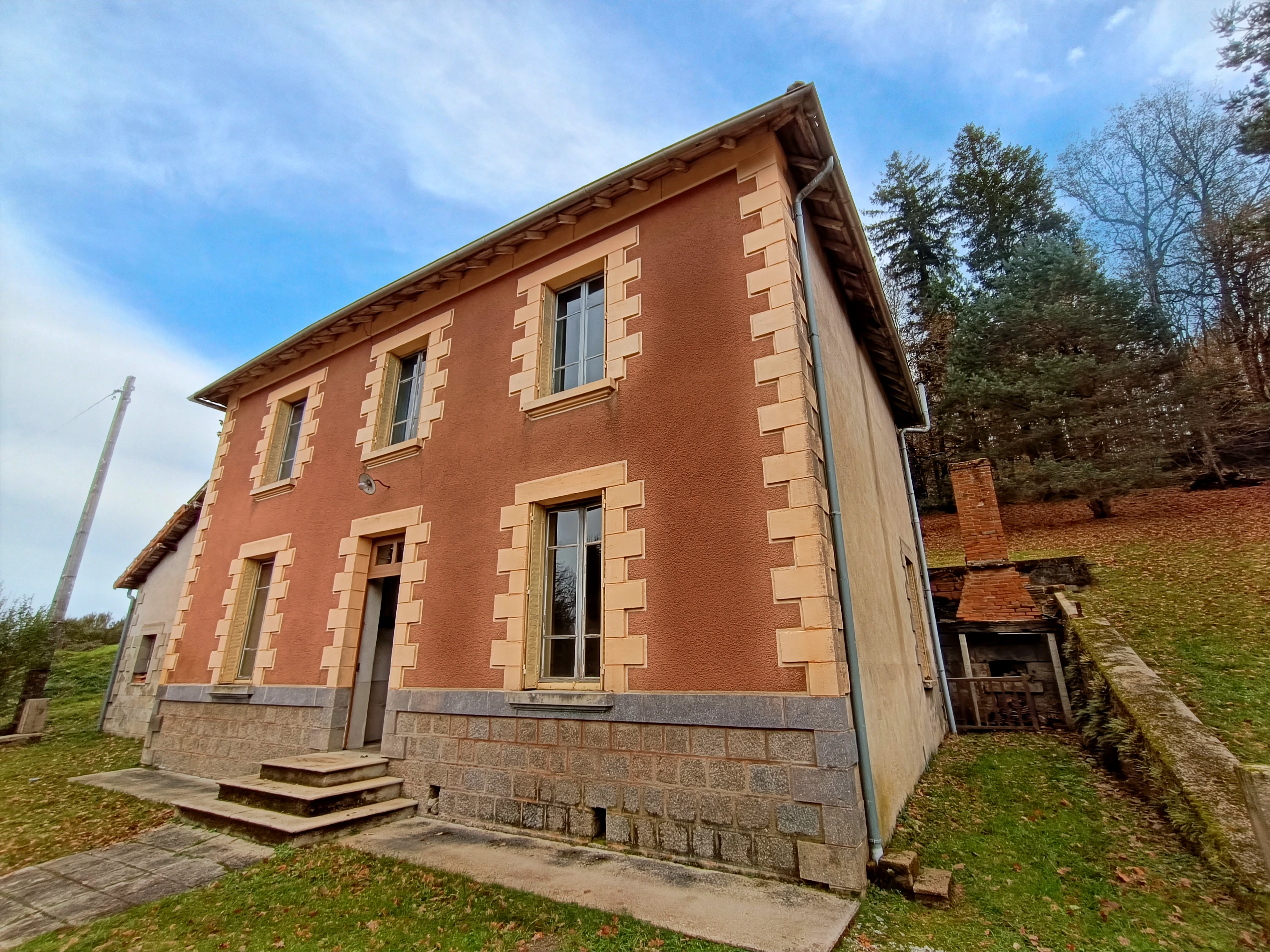
€79 900
Habitable 4-bed hamlet house near Aubusson
Aubusson, Nouvelle-Aquitaine, France
131 m² · 4 735 m² plot · 7 rooms

€119 900
Affordable stone house with tower in Charente, France
Turgon, Nouvelle-Aquitaine, France
346 m² · 2 975 m² plot · 8 rooms
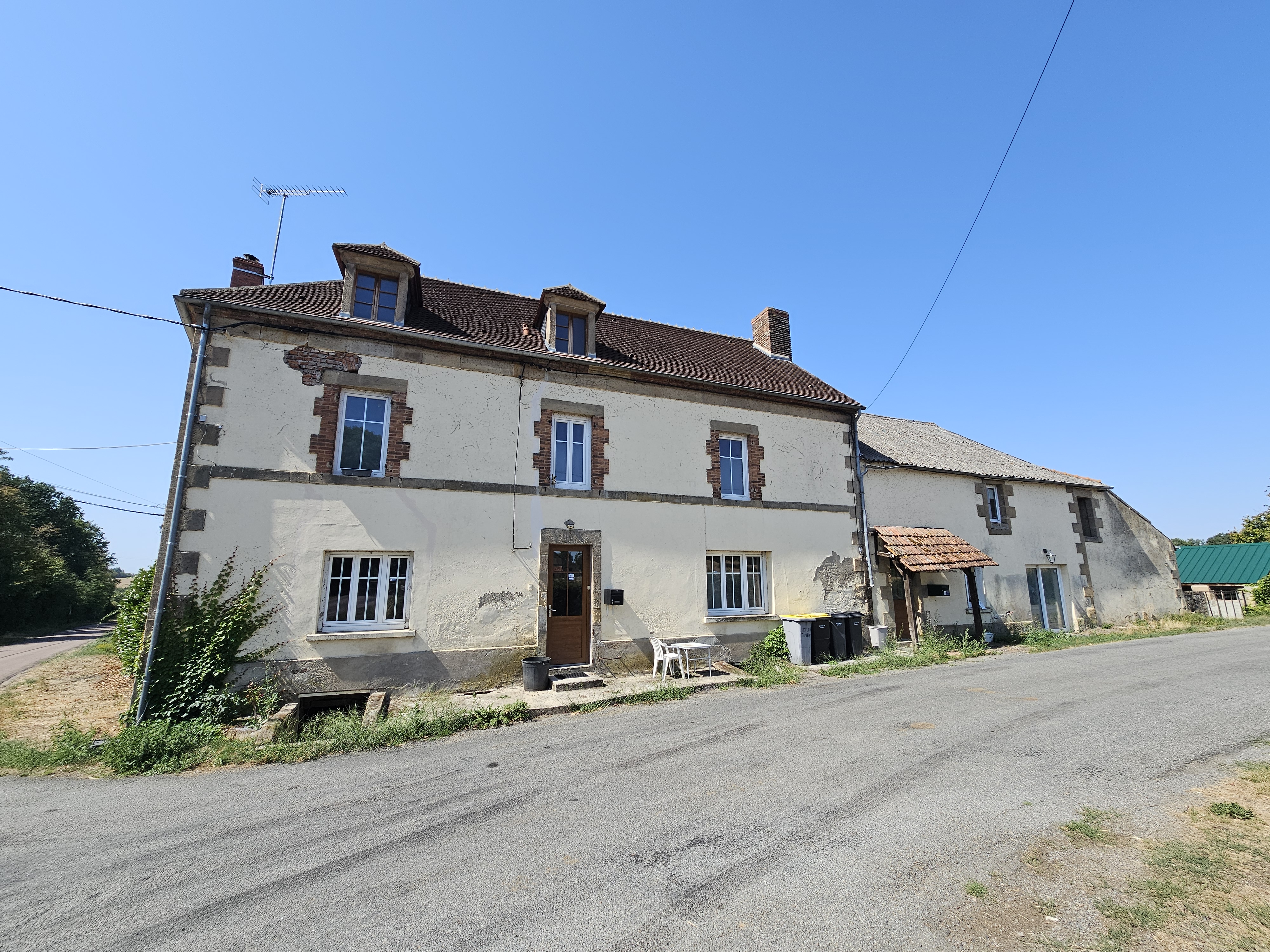
€124 000
Two houses & countryside views near Buxières-les-Mines
Buxières-les-Mines, Auvergne-Rhône-Alpes, France
232 m² · 12 647 m² plot · 8 rooms